What Their Reply Time Really Says About Their Interest
Reply speed as one signal among many: context, consistency, and how to use reply patterns (e.g. in ForReal) without over-interpreting.

ForReal Team
Author
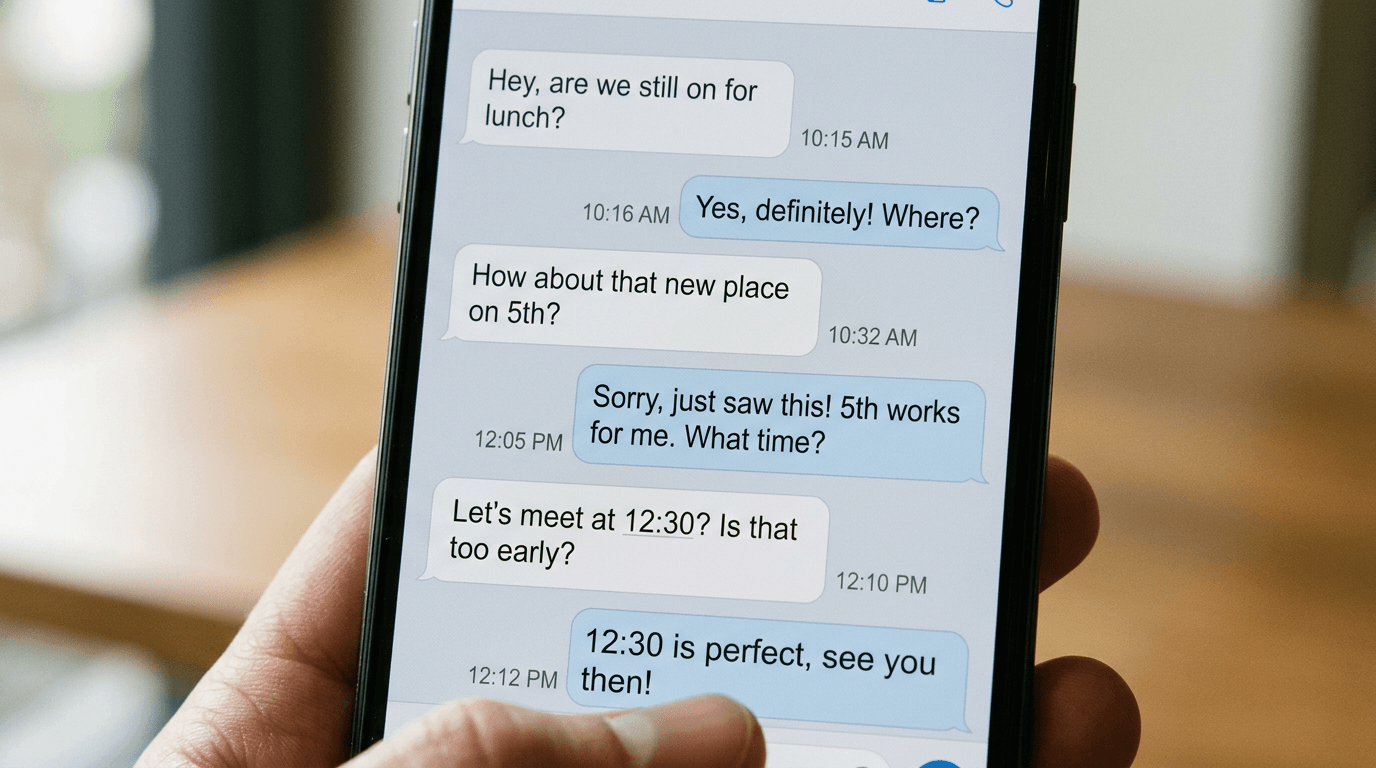
How fast someone texts back can feel like a barometer of interest, and sometimes it is. But reply time is one signal in a larger system: context (work, sleep, mental bandwidth), baseline habits (phone culture), and consistency over time matter more than any single delay. If you treat every gap as rejection, you will suffer, and you may misread people who are simply busy or slow texters. This guide explains how to interpret reply speed responsibly, what context changes the meaning, and how to pair timing with initiation, tone, and follow-through. For foundational framing, start with texting patterns and overthinking in dating. We will also cover what to do when your brain treats every unread message like a referendum on your worth, because that reaction is common, and it is worth interrupting gently and repeatedly. You can care deeply and still choose responses that protect your nervous system, not just your pride.
Reply Time as One Signal (Not the Only One)
Fast replies can mean interest, or habit. Some people live on their phone; others reply in bursts. Speed alone does not prove chemistry. Slow replies are not automatically low interest. They can mean focus mode, anxiety about wording, depression fatigue, family obligations, or simply not treating texting like a live chat. Pattern beats single instances. One slow reply is noise. A sustained shift, used to be responsive, now consistently distant, may be signal. Pair timing with other behaviors. Do they initiate? Do they ask questions? Do they keep plans? Do they show curiosity about your life? Reply time is a thin slice of a thicker story. If you want a broader lens on confusing dynamics, mixed signals is a useful companion read.
Context That Changes What Reply Time Means
Schedule and environment. Night shift work, caregiving, academic crunch weeks, and travel all change responsiveness. Message weight. A funny meme might get a fast reply; a relationship check-in might take hours because it requires emotional energy. Attachment and anxiety. Anxiously attached people may read delays catastrophically; avoidant people may delay to regulate closeness. Neither is "just" reply time, it is psychology interacting with texting. Stage of connection. Early talking stage pacing can include intentional space; later stages might include more reliable responsiveness, though healthy relationships still vary. Your baseline expectations. If you need frequent contact to feel secure, that is valid, but compatibility includes whether your needs can be met without coercion.
Practical calibration exercise: For one week, notice, without judging every minute, whether replies return within a range that feels respectful for your life stage. Then notice whether initiation is mutual, whether plans happen, and whether you feel calmer or more anxious overall. If reply time is the *only* thing bothering you, you might be anxious. If reply time sits inside a pile of other distance signals, you might be seeing incompatibility.
How to Use Reply Patterns Without Over-Interpreting
Track trends, not timestamps. Ask: has initiation changed? Has warmth changed? Has consistency around plans changed? Avoid punishment. Silent treatment or scorekeeping usually increases anxiety for both people. Use direct communication. If you need more responsiveness, say so plainly: "I feel more connected with a quick check-in some days, does that work for you?" Their response tells you about compatibility. Notice your own spirals. If you are screenshotting timestamps, you may be seeking certainty in the wrong metric. Pair digital with real life. Someone can be slow-texting and still be invested in person, or fast-texting and still emotionally unavailable.
If you use any tool to review patterns, use it for trends, not surveillance. The point is not to win an argument about minutes; it is to see whether effort, warmth, and follow-through line up with what you want. Healthy curiosity helps you choose; obsession convinces you that anxiety is evidence.
When Slow Replies Are a Yellow or Red Flag
Yellow flags: consistent unpredictability without explanation, last-minute cancellations paired with vague texting, or warmth only when you pull away. Red flags: disrespect, gaslighting ("you are crazy for caring"), or a pattern of ignoring your needs after you state them clearly. Remember: a flag is not a courtroom verdict, it is a prompt to pause and assess fit. If slow replies come with genuine effort in other domains, you might have different texting styles. If slow replies come with chronic disinterest and you feel lonely, believe the pattern.
Repair still matters. If you bring up reply time and they respond with defensiveness every time, you are learning about emotional safety. If they respond with curiosity and a real attempt to meet you halfway, you are learning about compatibility. The goal is not identical texting habits, it is mutual respect for the anxiety that distance can create.
From timestamps to the full picture of your thread
Reply speed is tempting because it is measurable. But healthy interpretation usually requires depth, initiation, tone, and follow-through, not one number on a clock.
ForReal is designed for that fuller picture: a private AI dating coach in WhatsApp and Telegram, plus a structured relationship home in the ForReal app with Timeline and Connection Insights. ForReal Interest Level summarizes trends from what you share; it is meant to complement your judgment, not replace it.
If you want a grounded overview, read how ForReal helps and what ForReal Interest Level is. For a close cousin topic, see crush hot in person, cold over text.
Frequently Asked Questions
Is it bad if they take hours to reply?
Not by itself. Hours can mean work, sleep, or digital boundaries. It becomes more meaningful when paired with other distance signals: no initiation, canceled plans, cold tone, or a clear change from how they used to behave.
They reply fast sometimes and slow other times. What does that mean?
Often, life. People are not consistent machines. Look at whether they communicate when they will be unavailable, whether they follow through, and whether you feel respected overall. Variable speed alone is usually not a verdict.
Should I match their reply time?
You do not need to play games. Match your own integrity: reply when you want, set boundaries if you need space, and do not perform disinterest to manipulate closeness. Healthy connection is not a contest of who can wait longer.
Does fast texting mean they like me?
It can mean they are interested, or it can mean they are a fast texter, or it can mean they are bored in that moment. Combine speed with curiosity about you, consistency, and effort outside the chat.
What if reply time triggers my anxiety?
Name it and support yourself: reduce checking behaviors, build other sources of stability, and consider whether this dynamic is good for you. If someone is right for you, you should not have to feel hypervigilant every day.
Reply time can hint at interest, but it is best read as part of a bundle: initiation, tone, consistency, and real-life follow-through. Context matters, patterns matter more than one delay, and direct communication beats timestamp archaeology. If you need steadier framing while dating, pair this article with dating anxiety strategies.
Related Reading: slow text response · should I text first