Why Do I Feel So Anxious After a Great Date?
Feeling anxious after a good date is common. Why it happens, excitement vs. anxiety, attachment, and fear of loss, and how to cope so you don't spiral or sabotage things.

ForReal Team
Author
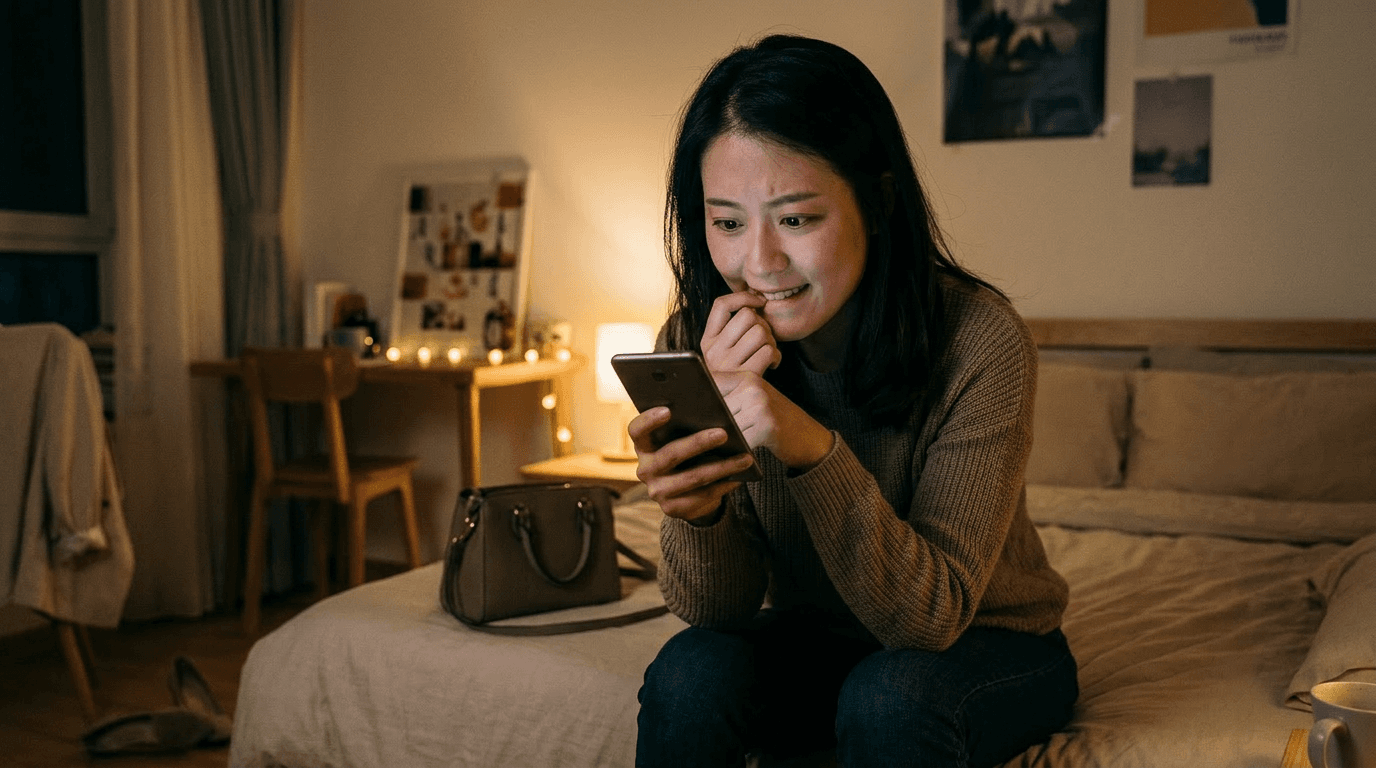
You had a great date, good conversation, chemistry, maybe even a plan to see each other again. So why do you feel so anxious now? You are replaying every moment, checking your phone, and worrying they will ghost or change their mind. You are not broken; this reaction is common, especially if you care about the outcome. Here is why post-date anxiety shows up, how excitement can mimic threat in your body, how attachment shapes the aftermath, and what actually helps so you do not spiral or sabotage something good. The goal is not to force yourself to feel chill; it is to respond to your nervous system with skills that match reality.
Your Brain Can't Always Tell Excitement From Anxiety
Excitement and anxiety use similar wiring: raised heart rate, restlessness, racing thoughts. When something matters to you, your brain can treat "this could be good" like "this could go wrong." So after a great date, the same energy that made the date feel electric can flip into worry: Will they text? Did I say something weird? What if they're not as into me? That doesn't mean the date was bad or that you're doomed to overthink, it means your nervous system is activated, and it's easy to interpret that as anxiety instead of hope.
Sleep, caffeine, and stress load can tilt the same sensations toward panic. If you are already depleted, your brain may default to worst-case stories because they feel like preparation.
Attachment and Fear of Loss
When you like someone, you have something to lose. Anxious attachment often shows up after closeness: you want reassurance, you fear they'll pull away, and you might seek it by over-texting, checking their socials, or replaying the date for "clues." That's not weakness, it's your system trying to protect you from rejection. The problem is that seeking constant reassurance can push people away or make you feel worse when you don't get the "perfect" response. Knowing that this is common in dating can help you step back and choose different behaviors instead of following the spiral.
Uncertainty and the Waiting Game
After the date, you're in limbo: you don't know if they'll reach out, when, or what they're thinking. The human brain dislikes uncertainty, it tries to "solve" it by guessing, replaying, and overthinking. So you might analyze their last message, their tone, or how long they took to reply. Most of that doesn't give you real information; it just keeps you in a state of alert. The reality is: their next move will reveal itself. You can't control it by worrying. Letting yourself sit with "I don't know yet" is hard but reduces the spiral.
High Stakes and Self-Worth
When a date goes well, it can feel like "this could be the one" or "finally, someone who gets me." That raises the stakes. If they don't text back or things fizzle, it can feel like a verdict on your worth, which makes the anxiety worse. Remind yourself: one person's response (or lack of it) is not a measure of your value. Even if this doesn't work out, dating is a process of fit, not a test you pass or fail. Separating outcome from self-worth helps you feel anxious without feeling like you're falling apart.
Practical Ways to Cope
Put the phone down. Set a time limit for checking messages. Constantly looking doesn't make them reply faster, it keeps you in the anxiety loop. Do something that absorbs you. Exercise, work, a hobby, or time with friends gives your brain something else to do. Write down what you know vs. what you're assuming. You know: the date went well, they said they'd like to see you again (or similar). You're assuming: they're losing interest, they're talking to someone else, you said the wrong thing. Often the story you tell is worse than the facts. Don't send a "just checking in" or double-text out of anxiety. If you want to reach out, do it once, clearly, and then leave space. **Use grounding: Breath work, a short walk, or naming five things you see can calm your nervous system. Consider tracking patterns over time.** If you often feel this way after dates, noticing the pattern in your dating life can help, not to fix it in one night, but to see that your anxiety doesn't always match reality.
When to Get Help
If post-date anxiety is so intense that it affects your sleep, work, or self-esteem every time, or if you often sabotage good connections by seeking reassurance or pulling away, it may be worth talking to a therapist. Attachment patterns and dating anxiety can be worked on. You deserve to enjoy good dates without paying for them with days of dread.
From Spiral to Signal: How ForReal Helps
Understanding psychology helps, but you also deserve tools that match your real thread. ForReal gives you one place for the person you are dating: a Timeline of conversations, feelings, actions, and moments, plus Connection Insights and ForReal Interest Level so you can see whether warmth and effort show up as a pattern, not a single message you cannot stop replaying.
You can also talk to the same AI dating coach in WhatsApp or Telegram when you want a grounded next step instead of a 2 a.m. panic draft. Linked coach chat is free with a ForReal account; full in-app depth is for subscribers and eligible trials. Read how ForReal helps you win your crush and what ForReal Interest Level is.
Frequently Asked Questions
Is it normal to feel anxious after a good date?
Yes. Many people feel a mix of excitement and anxiety, wondering if they'll hear back, replaying the date, or worrying they did something wrong. It's normal. It becomes a problem when it takes over your life or leads you to act in ways that undermine the connection (e.g., over-texting or withdrawing).
How long should I wait to text after a great date?
There's no magic number. If you want to text, do it when it feels natural, a simple "I had a great time" or following up on something you talked about is fine. One message is enough; then give space. If they're interested, they'll respond. Overthinking the exact timing usually doesn't change the outcome.
What if they don't text back after a great date?
It's disappointing, but it happens. Sometimes people are busy, unsure, or not as into it as you thought. You can send one gentle follow-up if it feels right, but after that, focus on moving on. Their silence is information. Your worth isn't defined by one person's response.
Why do I feel worse after a great date than a mediocre one?
A great date raises hope, and hope raises stakes. Mediocre dates can feel safer because you are less invested. If this pattern repeats, work on tolerating uncertainty and separating excitement from the urge to control the next step.
Can anxiety make me seem less interested?
Yes, some people freeze, withdraw, or over-correct and seem distant when they are actually very interested. If that is you, naming it lightly can help: "I had such a good time I am overthinking, bear with me." Vulnerability beats performing cool when you want connection.
Feeling anxious after a great date is common, your brain can mix up excitement and anxiety, attachment can make you fear loss, and uncertainty keeps you in a loop of guessing. Practical steps help: limit phone checking, do something absorbing, separate what you know from what you're assuming, and don't let anxiety drive your messages. If this pattern is intense or repeated, support for dating anxiety or therapy can help. You can enjoy a good date without paying for it with days of dread.
Related Reading: Dating anxiety signs, dating anxiety strategies, and overthinking in dating.